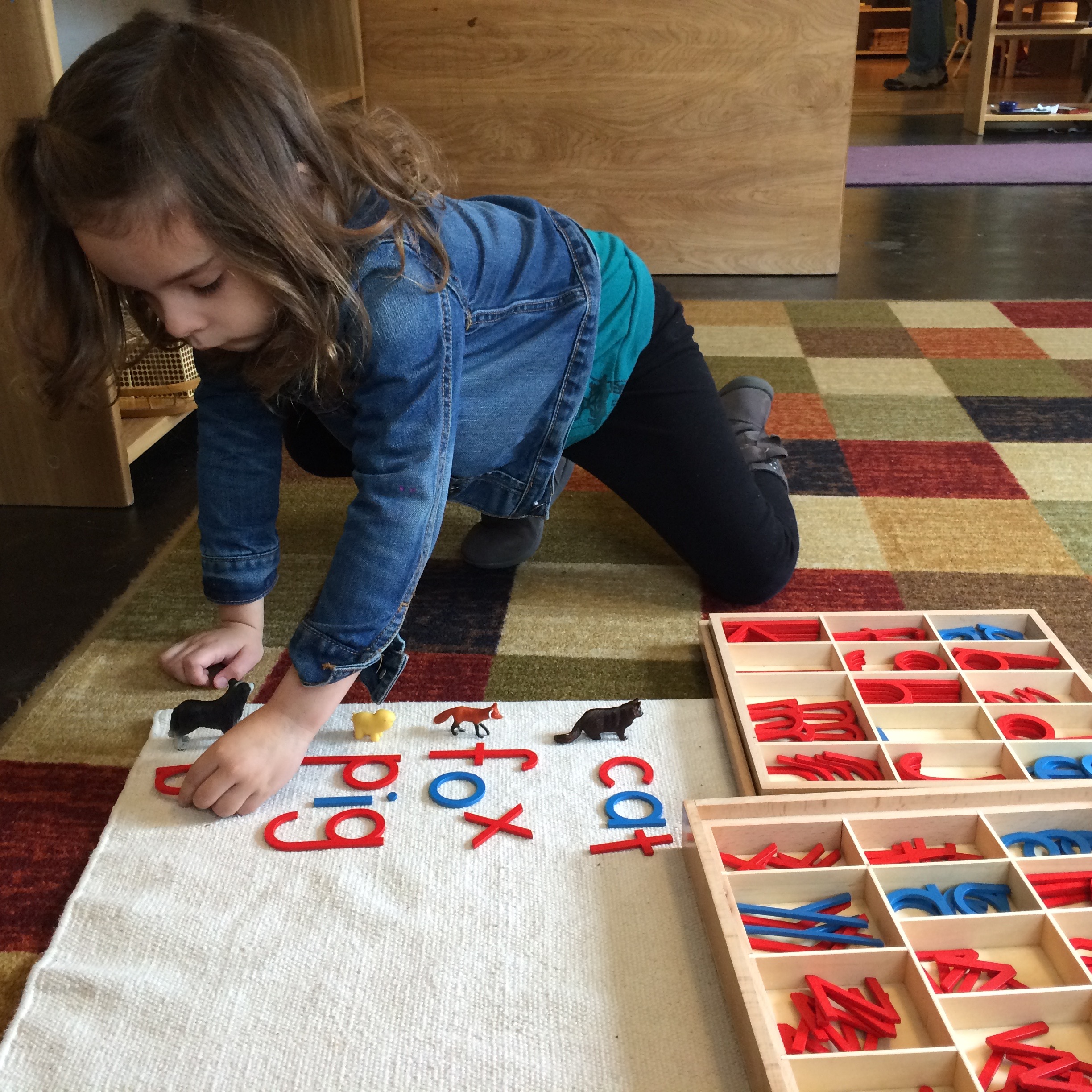
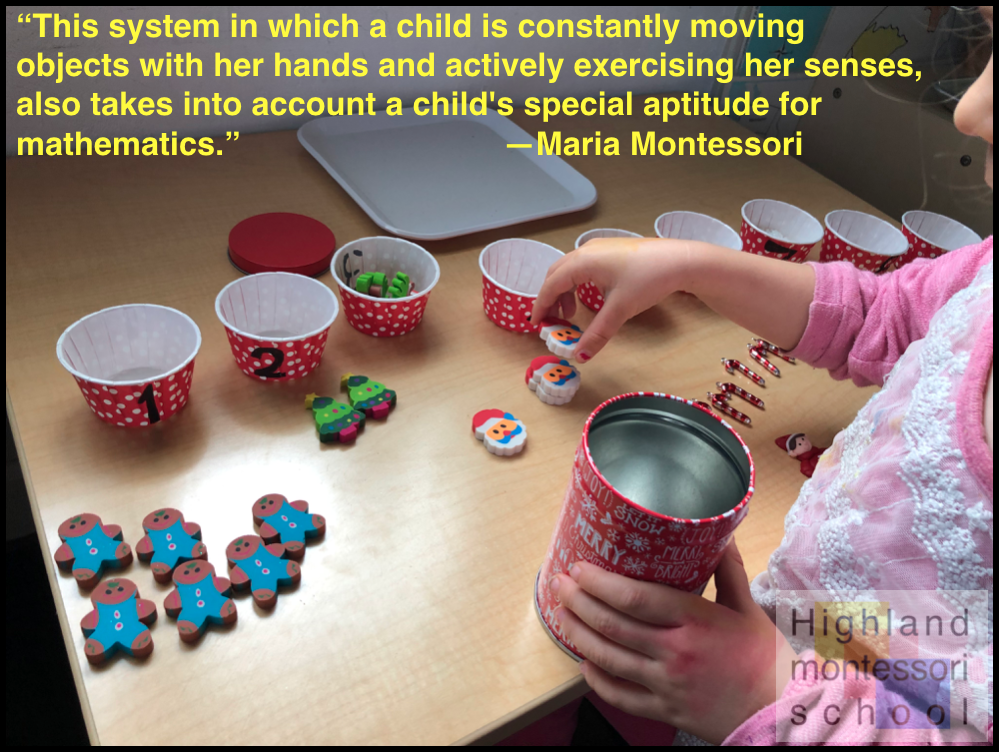
Watch a young child for a few minutes and it becomes obvious that they are explorers. A young child is a very social person. They observe. They explore. They ask “Why?” They try out everything new that they can possibly get their hands on.
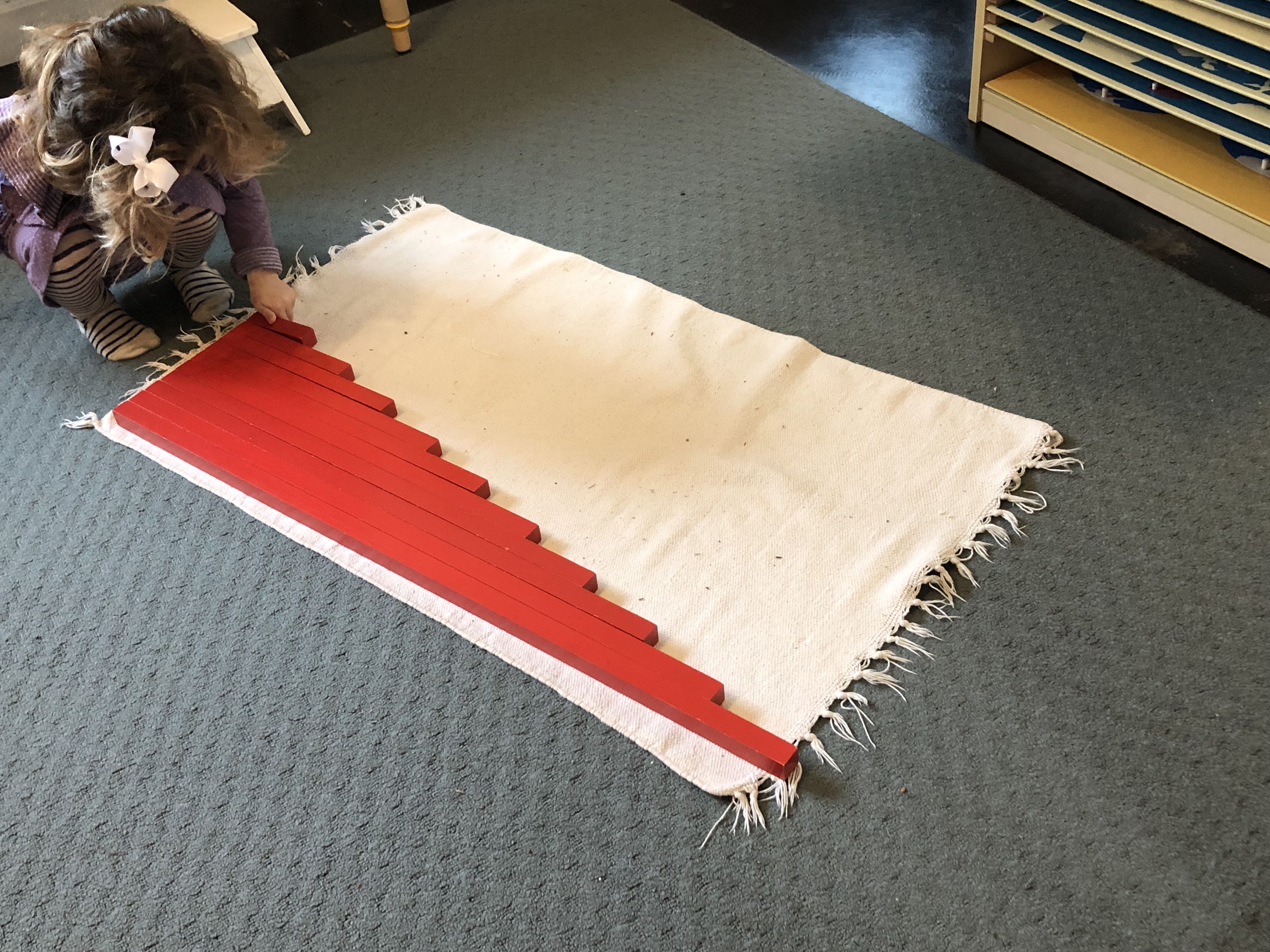
But it’s more than that. They are touching, listening, feeling, watching. This is how they learn about their world–through their senses. This is why it is so important to expose them to a classroom full of academic riches, and older kids who serve as role models. To do otherwise is a missed opportunity.
Two-year-olds are the youngest in our classroom–they are busy building coordination and self-confidence with Sensorial and Practical Life materials. In addition to the classic Montessori materials, modern toys like legos and magnetiles fit this mold and they are also available to our youngest students.
More and more research shows that much of human learning happens through (or at least is reinforced by) movement. We all know that 2- and 3-year olds are active. They learn about the world by exploring it. Picking up objects, turning them around in the hand, sliding them along the floor.
One facet of Montessori curriculum that enables, say, a two-year-old to succeed is the Practical Life area. Practical Life activities, such as pouring, wiping, setting a table, and opening and closing containers are attractive to our youngest students. The simple act of carrying a tray to a table or rolling up a workmat is a success for a 2-year-old student.
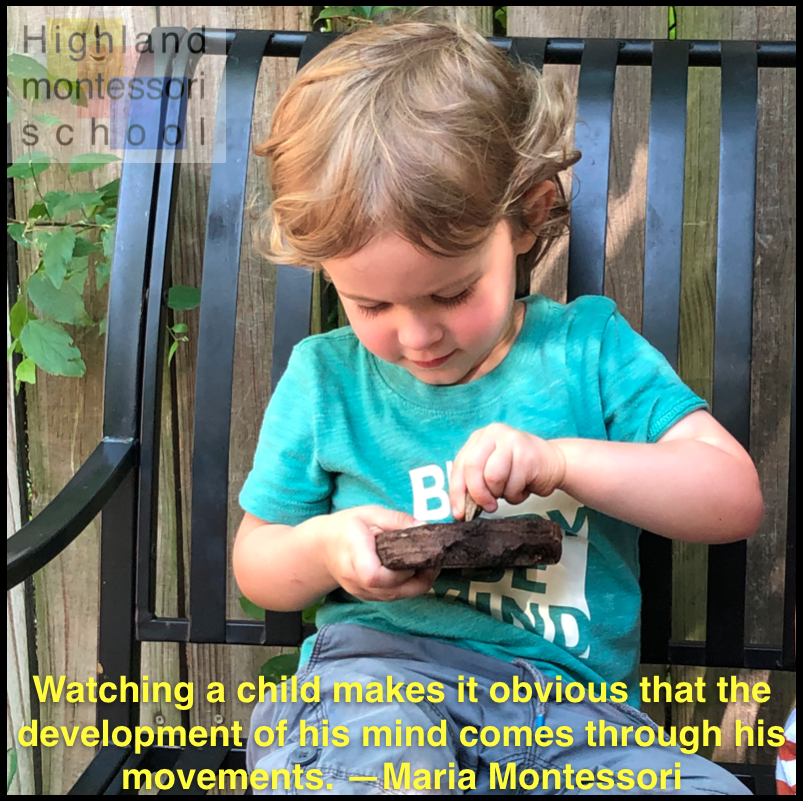
“Watching a child makes it obvious that the development of her mind comes through her movements.”
–Maria Montessori
But more than that, children are also observers. Which is why visitors to our classroom will quickly see that our 2- and 3-year-olds are integrated into the larger classroom, rather than being restricted to a separate “toddler” area. This allows them to observe the older children, who serve as their models for the years ahead.
Maria Montessori observed all of this over 100 years ago, long before research backed her ideations. She concluded that “if teaching is to be effective with young children, it must assist them to advance on the way to independence. It must initiate them into those kinds of activities which they can perform themselves and which keep them from being a burden to others because of their inabilities.”