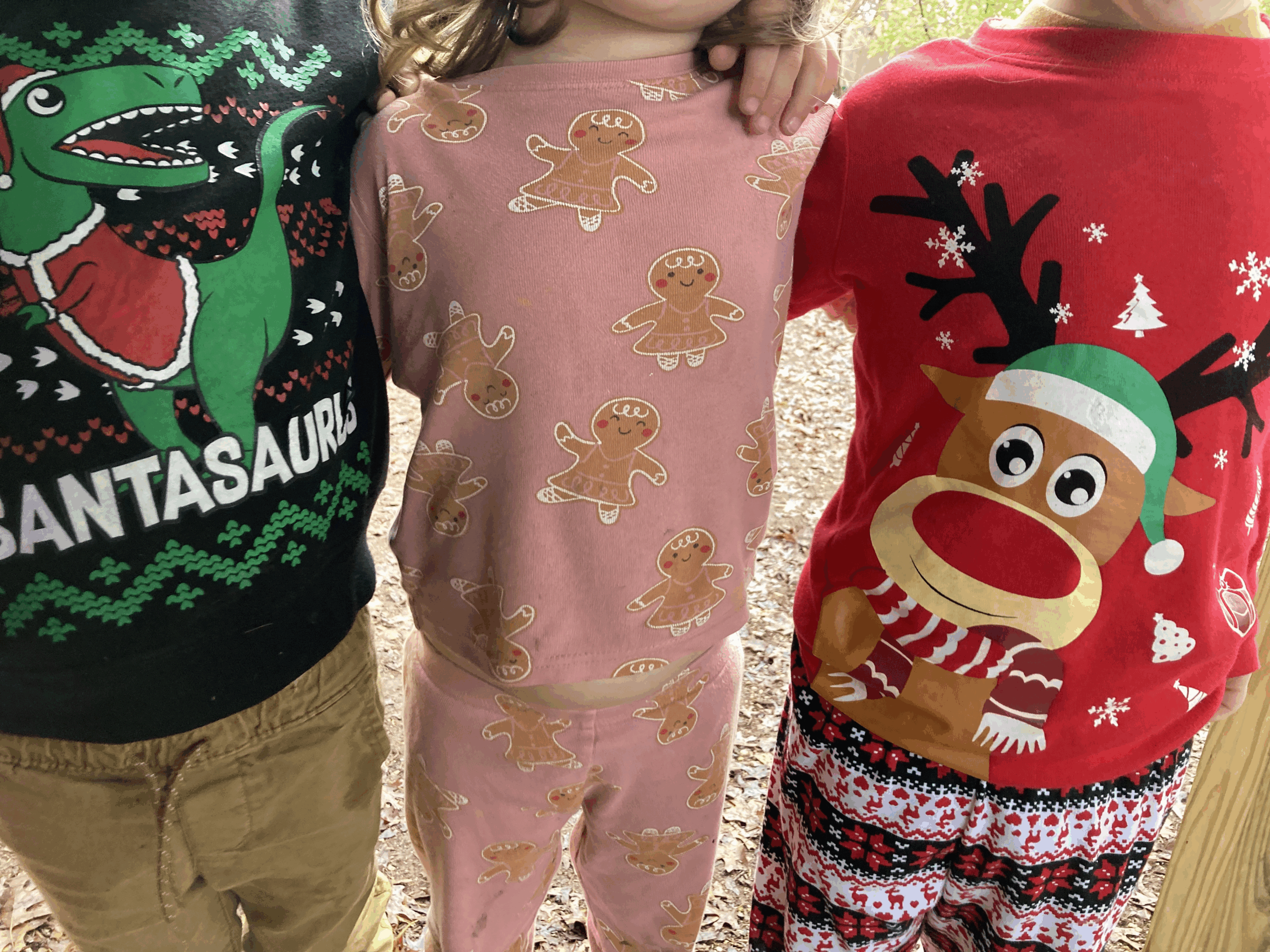
We regularly speak about the importance of consistency in the lives of young children. From school drop-off to lunchtime procedures to bedtime, routines help kids find comfort and a sense of place in our busy day-to-day lives. Indeed, Dr Montessori established that it is through the repetition of everyday tasks that children learn best. How then, do we guide children through this Holiday Season with all of its events and travel and dinners? (Oh my!) Of course, we can’t just ignore the holidays and stay home. Rather, how can we help children adapt with the change in routines?
How then, do we guide children through this Holiday Season with all of its events and travel and dinners? (Oh my!) Of course, we can’t just ignore the holidays and stay home. Rather, how can we help children adapt with the change in routines?
To that end, we’ve put together a list of considerations. Some of these things might be things you already do, some might be new ideas. Take what resonates for your family and leave the rest:
- Prioritize your own regulation. The more you can prepare yourself and your environment to anticipate the needs your children will have, the smoother time you will have.
- Be patient with yourself: even with preparation, not every moment will be serene. Forgive yourself and your children and move on.
- One thing to insulate your child from the buzz is simple: bring them to school when in session. Routines are very important to the young child, and keeping routines can be a challenge amidst all the hustle and bustle when life gets busy.
- Less is more. One calm event is better than multiple frenetic ones. Sue West of Cornell writes “new and exciting experiences and too much of a change in the daily routine can throw everyone into a tizzy.
- Consider that a child’s sense of time is learned. Do not discuss plans with your child more than a day (maybe two?) in advance. A week is a long time for a child… consider that as we write this Christmas is still six weeks away—for a child who just turned 4, six weeks 2.3% of their lifetime!
- This limited Time Horizon is related to the development of the child’s Executive Function. With the brain’s Executive Function still under-developed, children don’t yet have complete reasoning and impulse control. They are driven by desire to explore their world and their surroundings. That is, they are emotional beings relying on emotions to convey their needs.
- Create a visual daily schedule. Remember, they are not readers, and don’t yet get calendars.
- More than ever, resist the temptation to let them watch TV–because commercials!
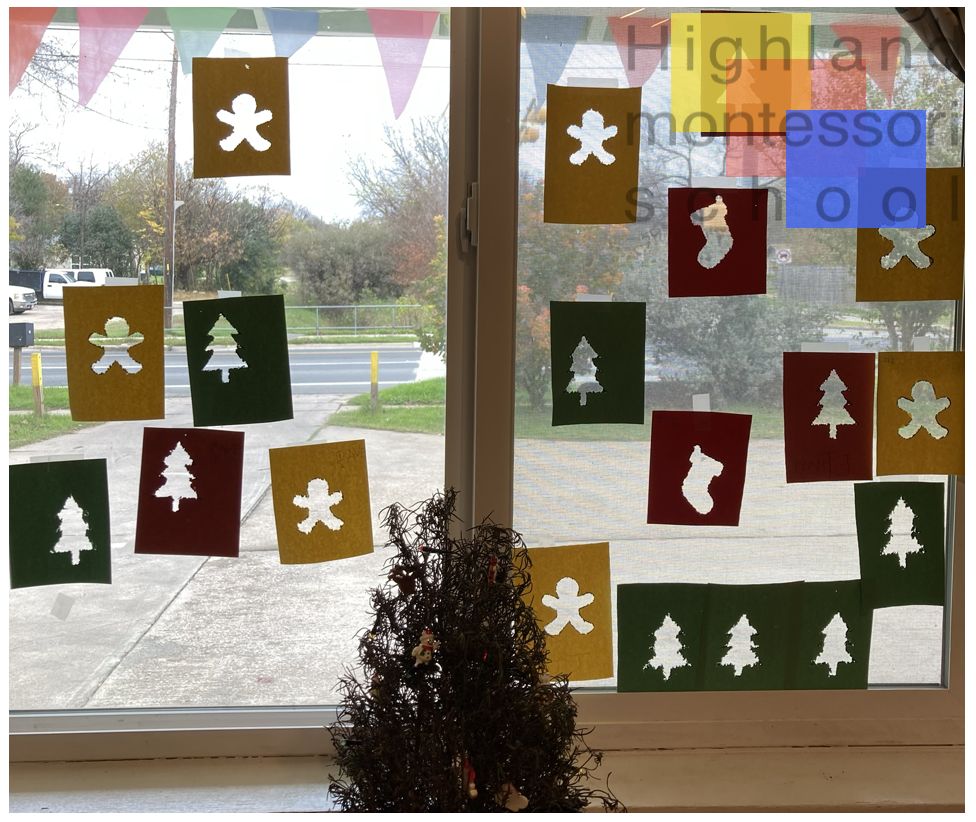
- Decorate slowly over several days and include children.
- Orient your child to a new physical space or an event. Some things to discuss ahead of time or point out when you arrive: What to expect (event timeline, social norms); point out where the bathroom is in a new space; make sure they know how to get food or water; discuss options for taking a break if they need one.
- Do some normal activities completely un-related to the holidays. Go to the park. Sit down for three meals a day. Take a walk. Schedule a playdate.
- If you must celebrate New Year’s Eve with the kids… tune into a European countdown, have a normal bedtime, then have your own celebration!
- Purposefully include your child in appropriate tasks such as food prep, cleaning, or decorating. Bonus points for setting up the activity in advance in a way that allows an appropriate level of independence and participation.
- Prepare yourself for exploration that a child is going to do.
- If you celebrate with a Christmas tree:
- consider leaving breakable decorations off the bottom half (or whole tree)
- Pipe cleaners can be used as ornament hangers that younger children are able to manipulate
- If candles are a part of your celebrations:
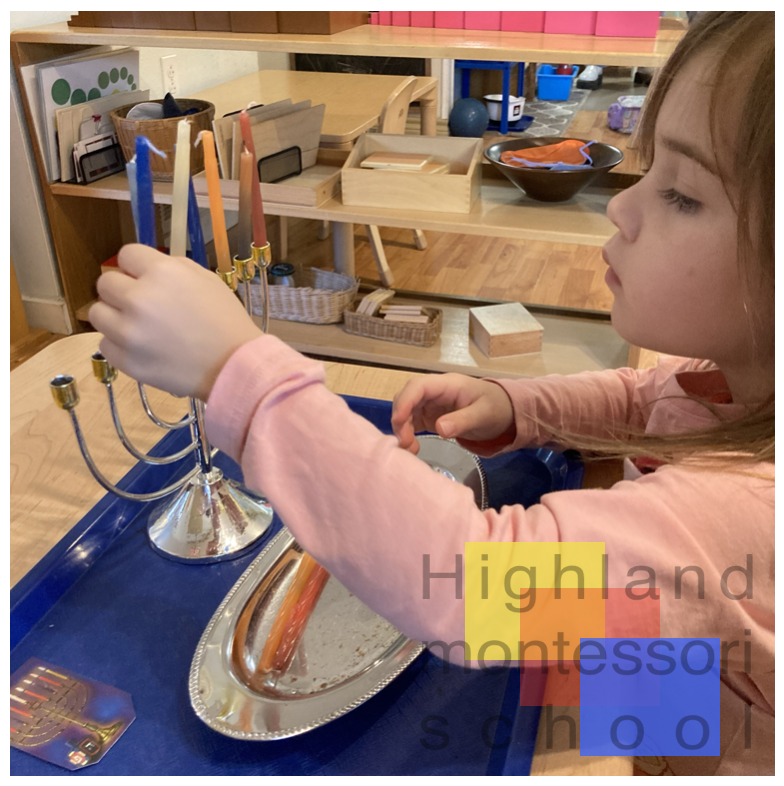
- let the child explore the unlit candle, candle holder, and even a match if you are comfortable.
- Then hold firm boundaries around safety when the candle is lit.
- For older children consider buying super long matches so that they can help light the candles and/or letting them blow the candle out after modeling how to do that.
- Communicate expectations to houseguests
(Thanks to Julia Moen for pulling together many of the above ideas and the below Montessori framework.)
Sources/Resources:
- Mario Montessori, The Human Tendencies and Montessori Education, 1956.
- Highland Montessori School. Embracing Holidays, Nov 2024.
- Highland Montessori School. Life gets busy? Stop and Smell the Flowers, Nov 2025.
- Sue West. Keeping the Holidays Calm for Young Children, Dec 2015.